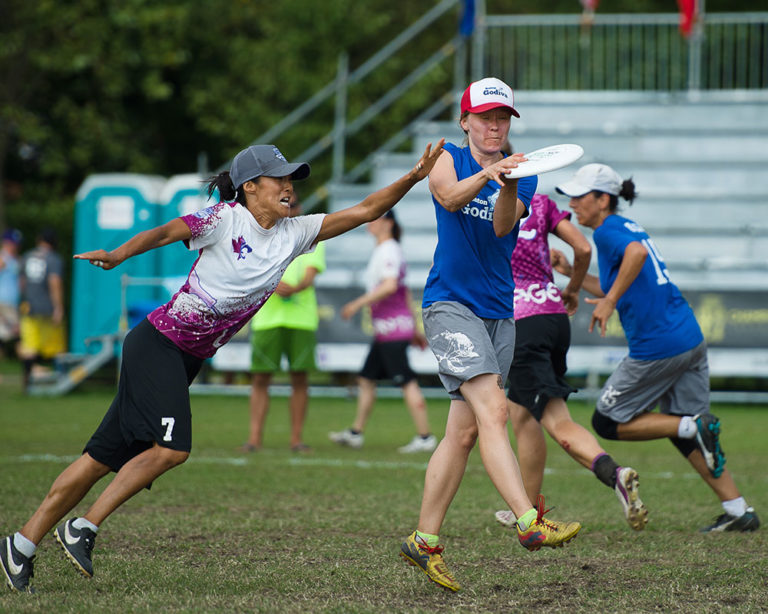
I remember a long time ago reading an article of Parinella’s somewhere where he explained a better way to toe the line is to only keep one foot down to maximize your reach rather than trying to dig both feet in. Such a simple tip, and it reminded me of my days before ultimate. Before frisbee, my previous love was volleyball. I used to subscribe to a volleyball magazine and there were always these quick 1 page articles with a handy little nugget of wisdom (think Zip’s Tips minus the sandwich eating suggestions).
Faking is an art and, whilst it looks easy, making good fakes requires subtlety, disguise and deception. The movements a player makes whilst faking should mimic exactly the movements that a player makes when they throw but halt at the last moment. The aim is to throw the defender off balance or to move them out of position or to make them think that the thrower wants to do something other than that which they are going to do.
The basics of faking are these:
Forcing,Practice,Psychology
30 April 2011
Forcing is a strategic attempt, by the defense, to force the thrower to throw the disc into an area of the defense’s choosing or to pressure the thrower into making an error. As such the defender forcing the disc has a large responsibility. Forcing is also the basis of team defense, which will be covered later. Many players appear to see forcing as an opportunity to rest before continuing to play defense. This is definitely not the case: forcing well requires a lot of focus, application and physical effort. Trusting your teammates is an important element of forcing as well – if ever defender did their best to not get broken, then it would help the team – forcing is difficult when one defender poaches and tries to do too much on their own instead of trusting their teammates.
Cutting is the art of getting free from a defender at a time and in a position that enables the cutter to be thrown to.
There are a few fundamental points that a cutter should remember: